How to Escape from a Wrist Grab (Advanced)
Version 2: Stepping Towards
This is the easier version of breaking from a grab. It's usually not the first one we teach, partly because it's easy. If it's easier for a defender to do something, it's also easier for them to hurt their training partner! In order for a student to learn this one, they should first demonstrate that they have good control over their body, as well as knowledge of when it's appropriate to use this level of force against someone.
On that note, if you are learning this by yourself, make sure you've thought about when and how you would use it first. It’s important to do this even for milder techniques like this one.
Keep in mind that the person statistically most likely to attack you is not a stranger, but someone you know. Are you prepared to use this amount of force against a friend or family member? What if they are older, younger, or a different gender than you initially imagined? What could be their intentions? What if they loose balance or fall down? Do you want to cause harm, or cause them to let go? Does the situation call for this level of force? If you do this to someone, are you prepared to face legal consequences for it?
These questions are not ones I can answer for you. You have to discover the answers for yourself. Once you've given this some thought, you can procceed to learning the technique.
Attacker and Defender: Use the same tips from the previous article.
Let's begin.
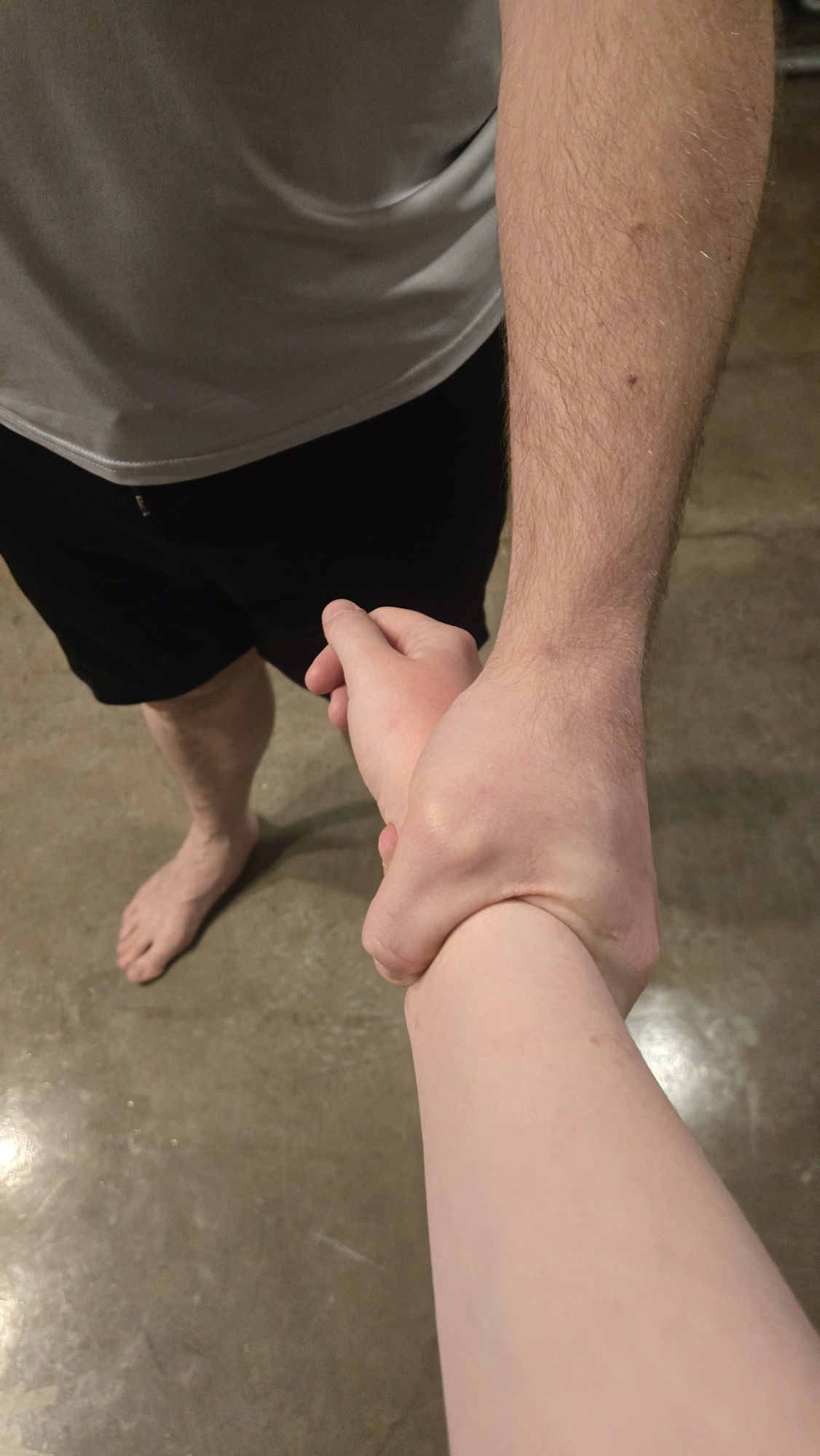
The Setup:
My wrist is grabbed, and I don’t like it. Maybe the attacker is trying to pull me somewhere; This technique is especially efficient for that.
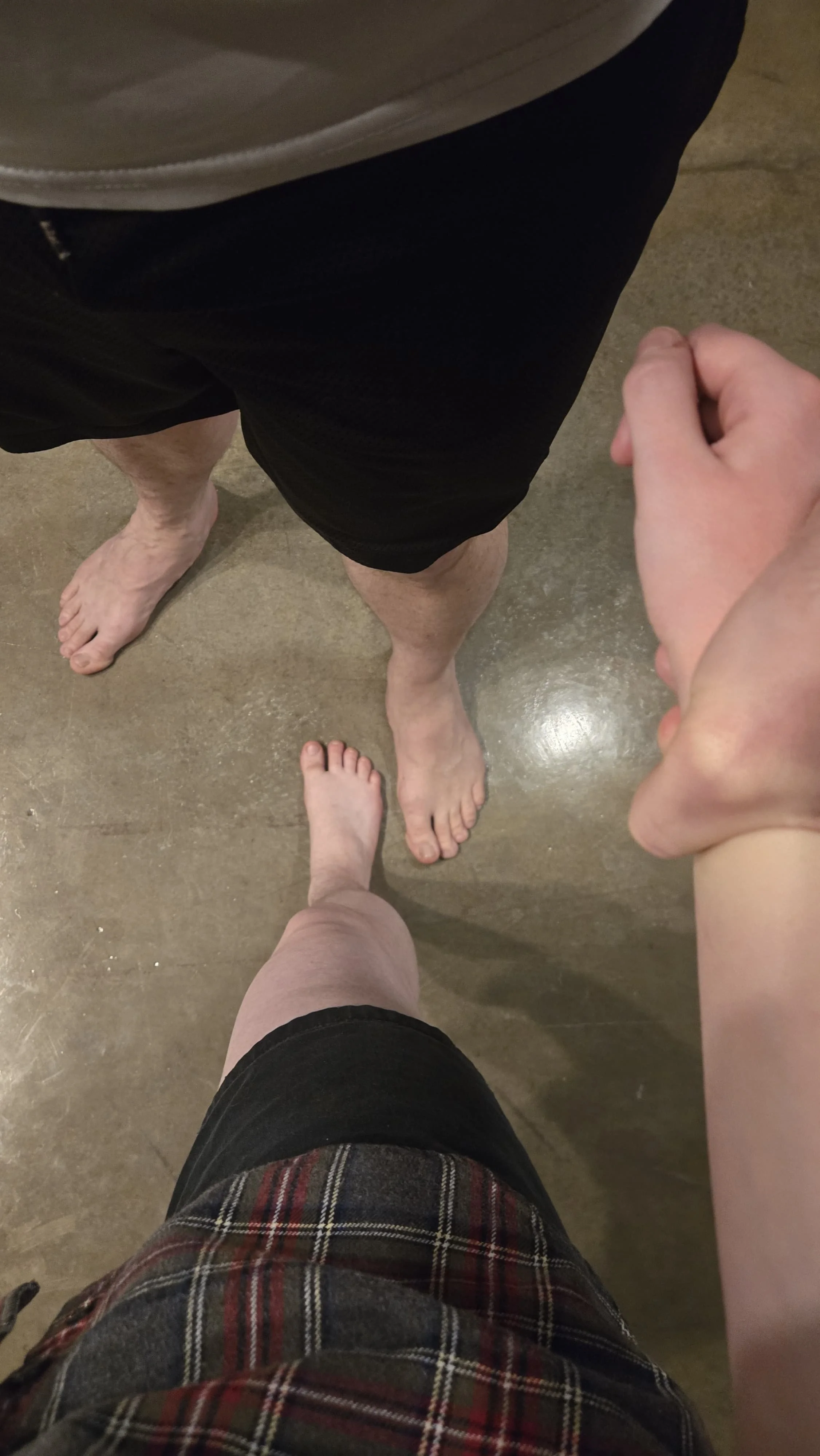
Step one:
Step toward the attacker. Directly forward, like you're going to walk through them. The longer the step you take, the more likely you are to cause them to loose their balance on the next step.
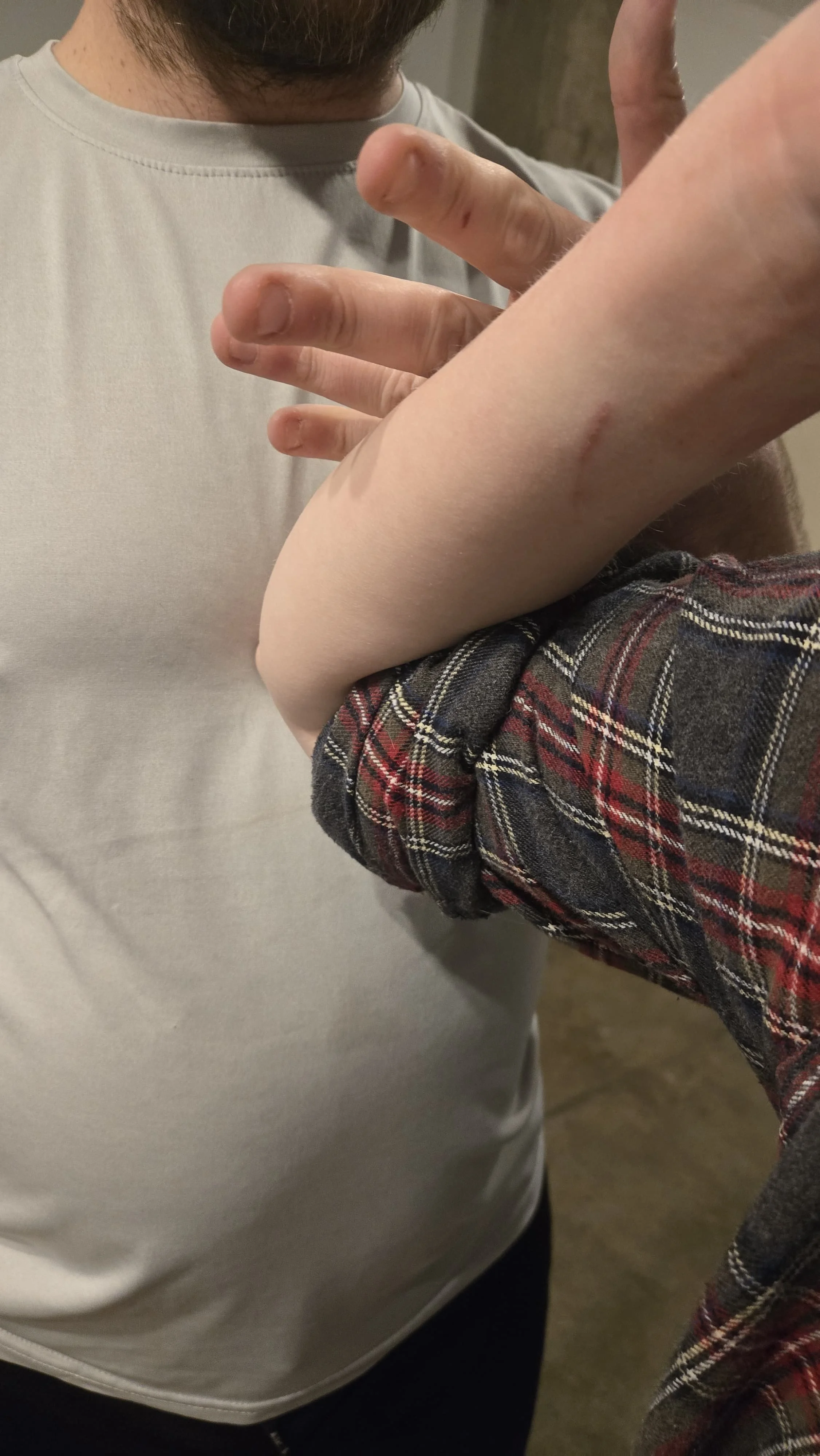
Step two:
Bring your elbow to their chest. I genuinely can't say this enough, because of how often I see students struggle with this, making something harder than it is: NO MUSCLE! Don't tense up. throw yourself forward using your hip muscles to propel yourself, and ideally you’ll drop into a renoji-dachi (inline stance).
Bring the point of your elbow directly to your opponent's solar plexus. Your thumb will be facing your shoulder, your pinkie towards the ceiling.
One of the most useful things you can learn in Karatedo is this...If you face resistance, don't keep fighting it. Redirect. Practice it when doing these techniques. If you feel resistance, alter what you are doing until there is no resistance.
Like Bruce Lee said: “Be like water.”
And...That's it, you're out. A quick overview of the position you find yourself in can tell you advantages and disadvantages of this technique.
Advantage: You may have already struck the opponent. You have 'control of the center' (a concept relevant to both martial arts and chess). The opponent is off-balanced because of your momentum moving towards them. If you take a big step and sink into a deep, well structured stance, like a renoji-dachi, you might even knock the person over.
Disadvantage: You may have struck and off-balanced the opponent, but you're also inside the reach of both of their arms and legs. Better do something else, fast, or get out of there!
And now, the video of it in action. It can work slowly or quickly (though of course, you probably wouldn't want to do it slowly in 'real life'!), demonstrating that this is not speed or strength, but again...
PHYSICS!
Video below.
--Bridget